
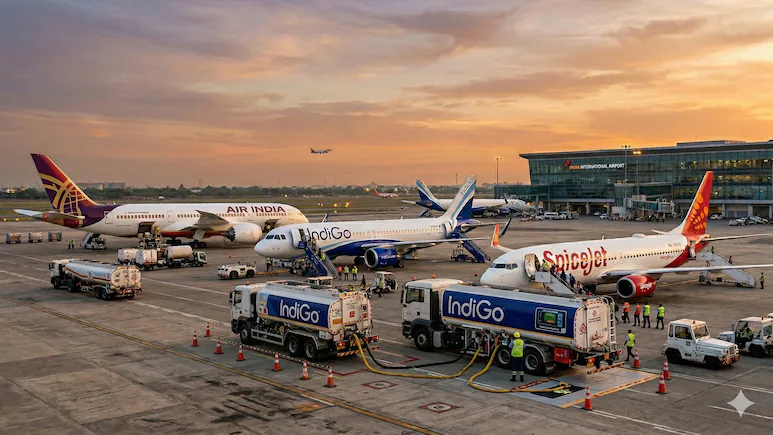
The Crisis: Why the Tax Cut Was Necessary
The Indian aviation sector has been under immense strain as fuel costs, which typically constitute 30–40% of operating expenses, surged to between 55% and 60%.
- Global Instability: Disruptions near the Strait of Hormuz—a transit point for 20% of global oil supplies—pushed global jet fuel prices from $99.40/barrel in February 2026 to $162.89/barrel by early May.
- Operational Strain: Major airlines, including Air India and IndiGo, have reported significant profitability hits, leading to route suspensions and reduced flight frequencies on key international sectors.
- Industry Plea: The Federation of Indian Airlines (FIA) had formally requested government intervention, citing that the fuel crisis threatened the viability of existing air routes.
The Tax Revisions
To stabilize the sector, both state governments have moved to normalize fuel taxation at their primary hubs:
| State | Previous VAT | New VAT | Scope |
| Delhi | 25% | 7% | All flights (6-month duration) |
| Maharashtra | 18% | 7% | Domestic operations |
Why Delhi and Mumbai?
These two cities serve as the backbone of India’s aviation infrastructure.
- Volume: Delhi’s Indira Gandhi International Airport handled nearly 80 million passengers in 2024-25, while Mumbai handled over 55 million.
- Strategic Refuelling: Because a vast majority of India’s domestic and international flights refuel at these hubs, tax reductions here have a disproportionately positive impact on airline balance sheets compared to cuts at smaller, regional airports.
Impact on Airlines and Passengers
For Airlines: Efficiency and Savings
The reduction in VAT allows airlines to move away from “fuel tankering”—the practice of carrying excess fuel from low-tax airports to avoid refuelling at expensive hubs. This change will reduce aircraft weight, improve fuel efficiency, and lower overall operational expenses for carriers like IndiGo and Air India.
For Passengers: The Fare Outlook
Despite the lower tax burden, passengers should not expect an immediate drop in ticket prices.
- Demand-Supply Imbalance: Airfares are currently dictated by strong post-pandemic demand and restricted supply due to aircraft groundings and engine-related maintenance issues.
- Margin Protection: Airlines are more likely to use these savings to absorb existing losses and stabilize their margins rather than passing the benefit directly to consumers through fare reductions.
Looking Ahead: The “GST” Debate
The recent tax cuts have reignited calls from the aviation industry to bring ATF under the Goods and Services Tax (GST) framework. Currently, ATF remains outside the GST umbrella, preventing airlines from claiming input tax credits. Industry leaders argue that until fuel is brought under a uniform national tax structure, operational costs will continue to be distorted by varying state-level VAT rates.
While Delhi and Maharashtra brace for a combined annual revenue loss of approximately Rs 1,500 crore, they remain optimistic that these measures will preserve their status as competitive, essential hubs in India’s growing aviation network.
Executive Summary
In a strategic move to combat skyrocketing operational costs, Delhi and Maharashtra have slashed Value Added Tax (VAT) on Aviation Turbine Fuel (ATF) to 7%. This intervention arrives as airlines struggle with the twin pressures of global crude oil surges due to the US-Iran conflict and a weakening rupee. While the move provides much-needed fiscal relief to the industry, experts caution that immediate relief for passengers in the form of lower ticket prices remains unlikely.

Very true
Good information!